
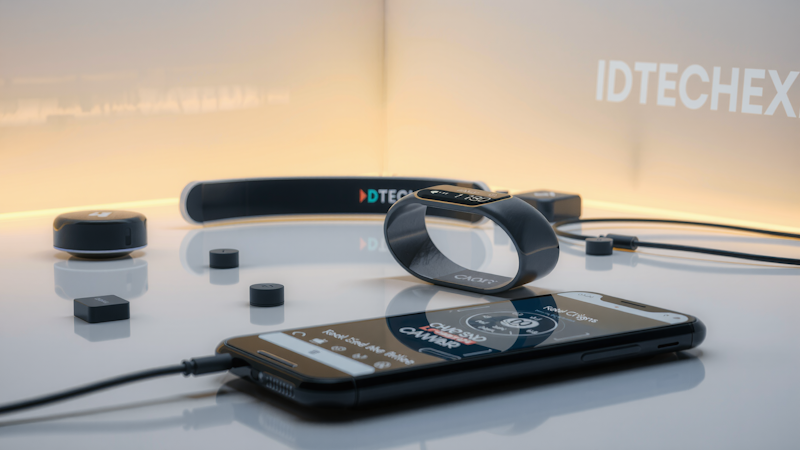
Around the clock access to health metrics, made accessible by wearable devices for consumers, is revolutionizing fitness optimization and healthcare in a non-invasive way. IDTechEx's report, "Wearable Sensors Market 2025-2035: Technologies, Trends, Players, Forecasts", explores the diversity of wearables, and forecasts the market to reach US$7.2 billion by 2035.
Devices and an overview of wearable technology
The term wearables encompasses a vast array of electronic devices and accessories, including watches and wrist bands, earphones and headphones, smart rings, glasses, headsets, chest straps, skin patches, and smart clothing. Their purpose is to allow for continuous data acquisition that is obtained accurately and efficiently due to being worn close to the body or directly on the skin. IDTechEx's report covers motion sensors, optical sensors, electrodes, temperature sensors, chemical sensors, novel biosensors, and wearable quantum sensors.
Sensing, actuating, displaying, and communicating, are the four subsections that can divide wearables up into their main purposes. For example, heart rate, temperature, and blood glucose are all examples of metrics that can be monitored by wearable sensors, while smart watches provide the benefit of hands-free communication through the display of smartphone notifications appearing on the watch face. Smart glasses can provide access to real time translations on the lenses, or visual narration of conversations for those hard of hearing. Map information while navigating through a city could also be shared from a smartphone onto the lenses, so people could walk with their head up and eyes forward, instead of leaning over a phone. IDTechEx's report, "Displays for Virtual, Augmented and Mixed Reality 2024-2034: Forecasts, Technologies, Markets", covers visual display technologies in more depth.
Sensor types and their primary applications
Some of the key biometrics outlined within IDTechEx's latest research report, which wearables are concerned with measuring, include glucose, heartrate and blood oxygen, respiratory rate, blood pressure, and motion. Where sensing is concerned, the continuity of measurements offered by wearable devices is unmatched and can provide information throughout the day rather than just at intervals or in a doctor's office. With the expectation for the remote patient monitoring market to grow, these technologies will pave the way for its success.
Skin patches worn by people with diabetes with small needles to access interstitial fluid can be connected to smartphone apps to provide real time data and help users manage their condition 24 hours a day and reduce the chances of high risks occurring. Some up and coming opportunities within this particular market that could be seen emerging in the future include non-invasive glucose monitoring using spectroscopic or chemical methods.
Optical sensors can be used to measure the absorption of light in the blood, which can then indicate heart rate or blood oxygen by picking up on changes in the size of blood vessels, or their composition respectively. Electrodes can be used in wearable sensing to measure voltage, current, or resistance on the surface of the skin to measure electrical activity in the body such as from the brain, muscles, or heart.
IDTechEx's report covers additional sensor types and their uses within specific wearable applications, as the market expands to include not only medical devices, but health and wellness. Additionally, IDTechEx states how the internet of things (IoT) will allow for the transmission of data across devices, to create a network of activity and health information, which even stretches to insurance companies. Data accumulated with the use of wearables could soon be highly valued by healthcare professionals and clinicians as being important for interventions and treatments in the future, as they provide a broader scope of information collected from continuous and accurate measurements.
For more information, visit IDTechEx's report, "Wearable Sensors Market 2025-2035: Technologies, Trends, Players, Forecasts" and the portfolio of Wearable Technology Research Reports and Healthcare Research Reports.
