
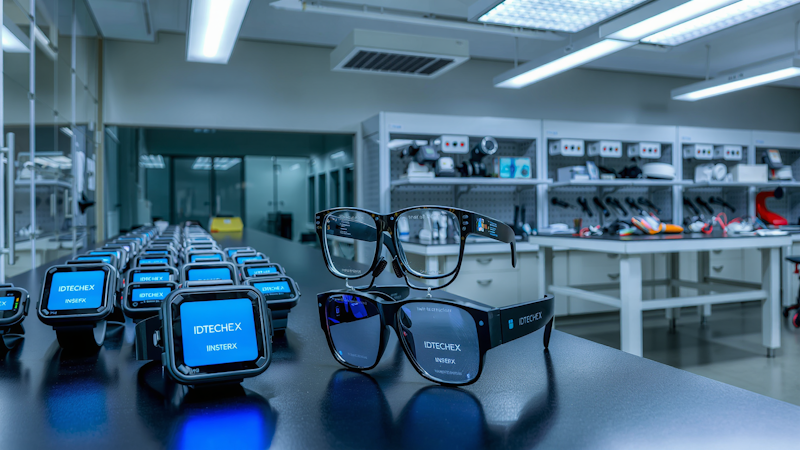
Accessing health metrics during any hour of the day is becoming the new norm as wearable technology is gaining traction and becoming increasingly widespread. IDTechEx's portfolio of Wearable Technology Research Reports offers insights into the market and explores the possibilities for continuous health data tracking.
Wearables for sensing and collecting biometrics
The vast array of technologies and device types all differ in their capabilities, each providing means of either sensing, actuating, displaying, or communicating. With regards to sensing, glucose, heartrate, respiratory rate, blood pressure, blood oxygen, and motion, are some of the main biometrics wearables are concerned with measuring.
Continuity is one of the largest buzzwords within the wearables sector, as the nature of wearable devices and the way they are worn close to the body allows them to constantly collect valuable biometric data. Optical sensors are one type of wearable sensor technology that can detect heart rate or blood oxygen by measuring the absorption of light by blood. Wearable optical sensors monitoring changes in blood flow rate as well as vessel size provide valuable cardiovascular data to users and healthcare providers, relating these to underlying health conditions. Electrodes are another approach to wearable sensing, able to measure current, voltage, or resistance on the skin's surface, which can correlate to electrical activity from the brain and various muscles, including the heart.
Smartwatches, smart rings, and skin patches for diabetes, are some examples of devices that offer on-the-go sensing capabilities. Remote patient monitoring is a trend that has been growing over the past few years, promising continuous data collection around the clock rather than at certain intervals or appointments. Data collected by smartwatches and skin patches can be stored in smartphone apps, so that biometric data trends may be identified over wide periods of time, for more accurate readings and contextualised information. IDTechEx's report, "Wearable Sensors Market 2025-2035: Technologies, Trends, Players, Forecasts", goes into further detail.
Smartwatches are a type of wearable device that also boast top tier communication abilities. Smartwatches connected to smartphones can deliver messages, notifications, and health data including step count and heartrate, handsfree to the wrist of users. The popularity of these devices is allowing people to maintain consistent awareness of their bodies' vital metrics, for either health management purposes or just for general curiosity.
Skin patches equipped with a small needle to reach interstitial fluid in order to take blood sugar readings can also offer similar communication and data storage benefits. Linked to a user's smartphone, people managing diabetes can be informed when they may require insulin. IDTechEx's report, "Digital Health and Artificial Intelligence 2024-2034: Trends, Opportunities, and Outlook", explores the possibilities for this information to be useful in developing digital technologies and solutions for very busy healthcare systems.
Glasses giving directions and brain interfacing
Real time translations and visual narration are two display features that could be enabled with smart glasses, so people who may have difficulty hearing or keeping up with a conversation could have dialogue presented to them on the lenses to read. When hooked up to a smartphone, smart glasses could also provide map information and directions, so users can walk around a city without bumping into other people or needing to look down at a phone screen. The integration of information with the real world via display technology may be revolutionary in changing how people go about their lives, and it could all be done seamlessly and discreetly through an interface as ordinary as glasses.
In another categorization of wearable devices working close to the body, developments in the brain-computer interface market are being made to interpret brain data within a wearable and potentially mobile form factor. Magnetoencephalography (MEG) helmets, for example, are a technology that can use the electrical activity of neurons to measure the magnetic fields around the brain. While once only being accessible in a large scanning device, this technology being integrated into helmets could allow for increased convenience, though developments are still being made to ensure the effectiveness of the technology remains unaffected. IDTechEx's report, "Brain Computer Interfaces 2025-2045: Technologies, Players, Forecasts", provides information on other types of wearable devices that could one day provide easier means of gaining neural insights.
For more information on the latest technology developments within the wearables sector and expected uptake in the short to medium term, visit IDTechEx's portfolio of Wearable Technology Research Reports.
